English
 العربية

- Understanding Afro Hair Transplant
- What Makes Afro Hair Transplant Different
- Why Turkey Is a Trusted Destination
- Challenges of Afro Hair Transplant
- Best Techniques for Afro Hair
- Step by Step Procedure
- Results and Growth Timeline
- Advantages and Considerations
- Hair Transplant Cost Comparison
- Choosing the Right Clinic
- Start Your Journey with Hair Cultivate
Understanding Afro Hair Transplant
Hair transplant for afro textured hair requires a specialized approach. The unique curl pattern of afro hair makes the procedure more complex compared to straight hair types.
Thanks to modern hair transplant procedures, it is now possible to achieve natural and dense results even with curly hair structures.
Choosing the right clinic with experience in afro hair is essential for successful outcomes.
What Makes Afro Hair Transplant Different
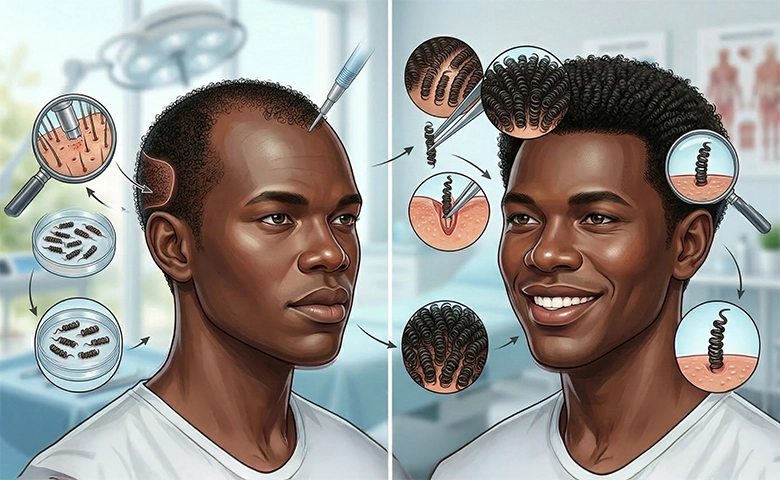
Afro hair follicles are naturally curved both above and below the skin. This means that extraction requires more precision to avoid damaging the follicles.
The procedure is usually performed using follicular unit extraction, but with special techniques adapted to curly hair roots.
Implantation also requires careful control of angle and direction to match the natural curl pattern.
Why Turkey Is a Trusted Destination
Turkey has become a leading destination for hair transplant procedures due to its advanced clinics and experienced specialists.
Many clinics in Istanbul have developed expertise in treating different hair types, including afro textured hair.
Patients benefit from high quality treatment, modern technology, and significantly lower costs compared with Western countries.
Challenges of Afro Hair Transplant
Afro hair transplant presents specific challenges that require advanced skills and experience.
| Challenge | Description |
|---|---|
| Curved Follicles | Hair roots grow in a curved shape under the skin |
| Extraction Difficulty | Higher risk of follicle damage without proper technique |
| Angle Control | Requires precise placement to match natural curl direction |
| Density Planning | Needs careful distribution for natural volume |
These challenges make it essential to choose a clinic with proven experience in afro hair procedures.
Best Techniques for Afro Hair
Different techniques can be used depending on the patient’s needs and hair condition.
| Technique | Main Benefit | Best For |
|---|---|---|
| Manual FUE | Greater control during extraction | Curved follicles |
| DHI | Precise implantation | Hairline design |
| Hybrid Method | Combination of techniques | Advanced hair loss |
The technique is selected based on hair type, donor area quality, and desired density.
Step by Step Procedure
The procedure begins with a detailed consultation to analyze hair structure and plan the treatment.
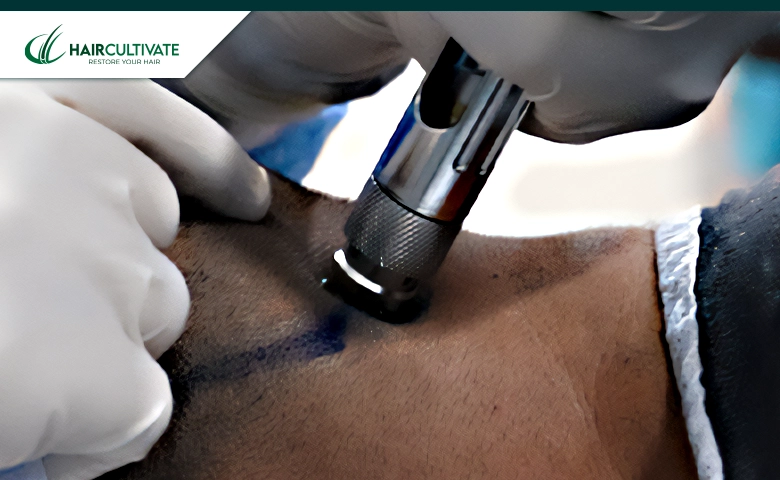
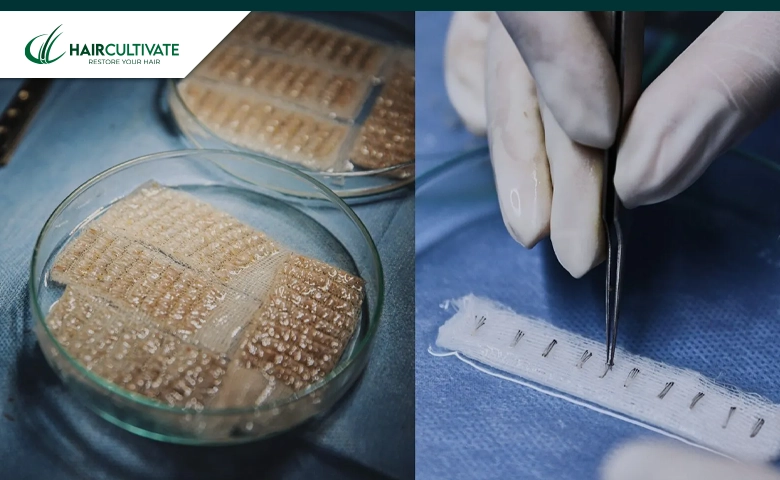
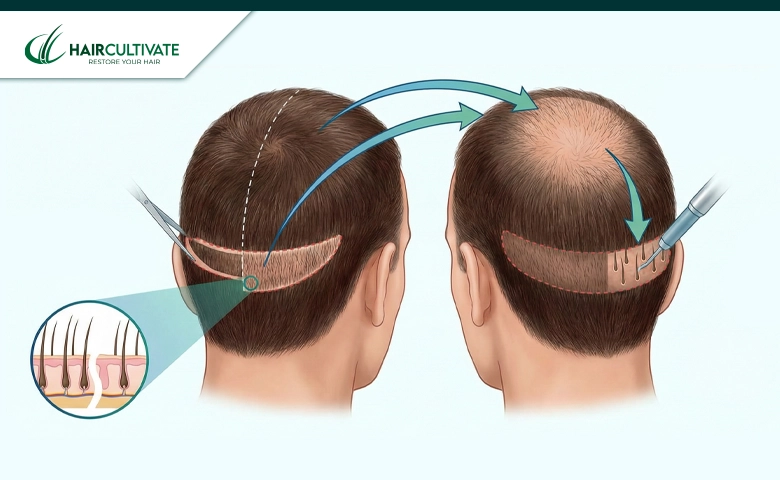
Hair follicles are carefully extracted from the donor area using specialized tools adapted for curly roots.
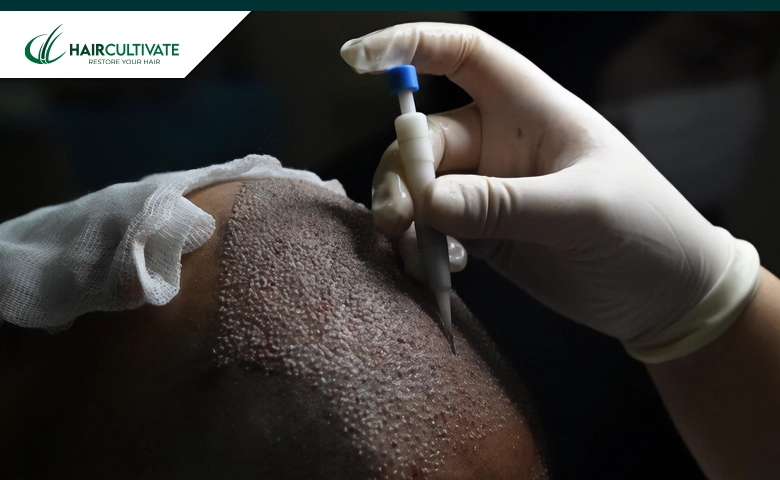
Each follicle is then implanted with attention to natural curl direction and hairline design.
The procedure usually takes between six and eight hours.
Results and Growth Timeline
After the procedure some shedding may occur during the first month. This is a normal part of the hair cycle.
New growth usually begins around the third or fourth month. Noticeable improvement appears after six months while final results are visible after twelve to eighteen months.
The final result is natural looking hair that blends seamlessly with existing afro hair.
Advantages and Considerations
| Advantages | Considerations |
|---|---|
| Natural results | Requires experienced specialists |
| Permanent solution | Procedure is more complex |
| Improves density | Results take time |
| Custom hairline design | Needs proper aftercare |
Hair Transplant Cost Comparison
| Country | Average Price | Typical Grafts |
|---|---|---|
| Turkey | 3000 to 5500 USD | 2500 to 4000 grafts |
| United States | 12000 to 18000 USD | 2000 to 3500 grafts |
| United Kingdom | 10000 to 16000 USD | 2000 to 3500 grafts |
| Germany | 9000 to 15000 USD | 2000 to 3500 grafts |
This cost difference makes Turkey one of the most attractive options for afro hair transplant.
Choosing the Right Clinic
Choosing the right clinic is especially important for afro hair transplant due to the complexity of the procedure.
Look for clinics with proven experience in afro hair cases, real patient results, and advanced techniques.
A professional clinic will provide a personalized treatment plan based on your hair type and goals.
Start Your Journey with Hair Cultivate
At Hair Cultivate in Istanbul we specialize in advanced hair transplant techniques for all hair types, including afro textured hair.
Our specialists focus on precision, natural results, and personalized treatment plans tailored to each patient.
If you are ready to restore your hair with a technique designed specifically for your hair type, this is the perfect time to take the first step with a professional consultation.