 Italiano
 Türkçe
 Español
 Русский
 فارسی
 Français
 English
 العربية


- Hair Transplant in Turkey: An Overview
- What Is a Hair Transplant?
- Who Is a Good Candidate?
- Why Patients Choose Istanbul
- Available Hair Transplant Techniques
- Step by Step Hair Transplant Journey
- Expected Results and Timeline
- Advantages, Risks and Considerations
- What Does a Hair Transplant Cost?
- How to Choose the Right Clinic
- Start Your Journey with Hair Cultivate
- References
Hair Transplant in Turkey: An Overview
Hair loss is common, and many people now look into surgery to restore hair in thinning or bald areas. A hair transplant is a surgical treatment, not a cosmetic quick fix: it needs careful planning, a suitable donor area and realistic expectations. Below we explain how it works, who it suits, what recovery looks like and what affects the price.
What Is a Hair Transplant?
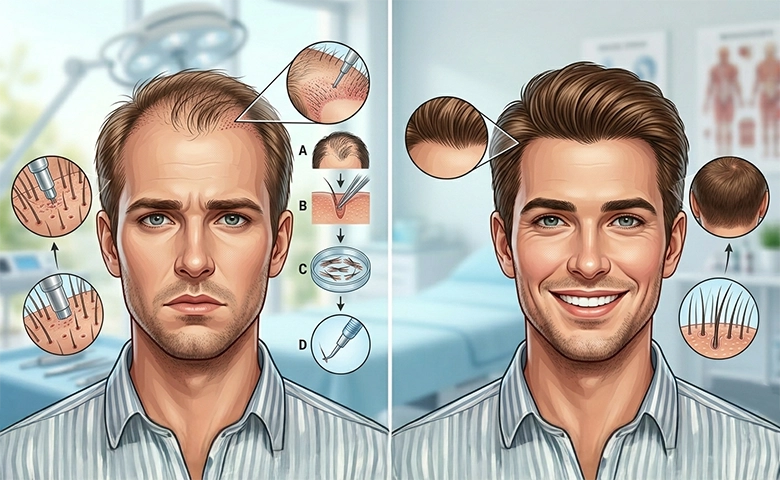
In a hair transplant, hair is removed from the back of the head and moved to thinning or bald patches. There are two main ways to harvest the grafts. In follicular unit transplantation (FUT), a thin strip of skin with hair is removed from the back of the head, divided into individual grafts and the wound is stitched. In follicular unit extraction (FUE), individual hairs are removed one by one, usually after the back of the head has been shaved (NHS).
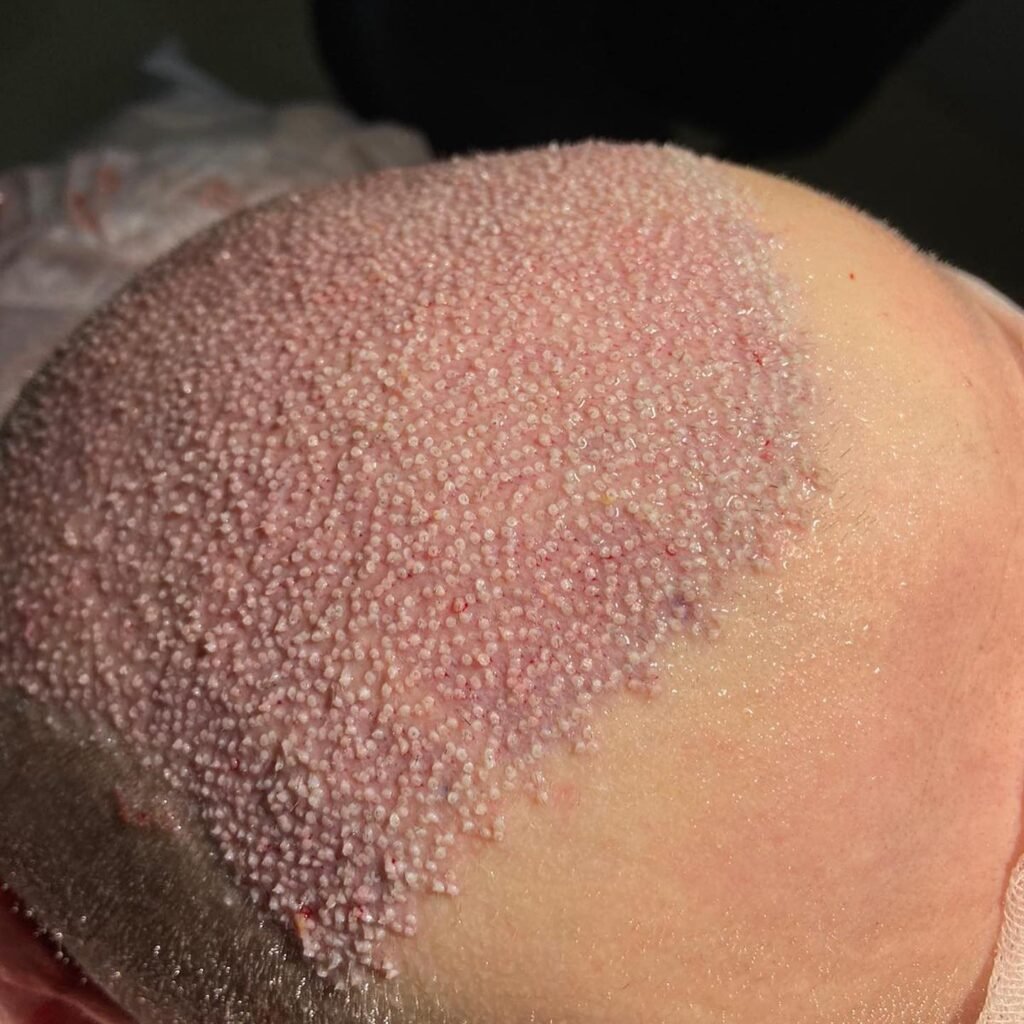
FUE uses micro punches between 0.7 and 1.2 mm in size to remove individual follicular units, which are then placed into small recipient sites at angles chosen to look natural. FUE does not leave the linear scar of the strip method, but it is not completely scarless either (ISHRS, FUE guide). Most hair transplants performed at Hair Cultivate use FUE-based techniques.
Who Is a Good Candidate?
The NHS describes a hair transplant as suitable for people with permanent baldness, the type that runs in families, and notes it is usually not suitable for alopecia areata, a condition that causes patchy hair loss (NHS). According to the International Society of Hair Restoration Surgery, the ideal candidate has hair loss that has stabilised on medical therapy, good donor hair, realistic goals and is medically fit for surgery (ISHRS, FUE guide).
Age matters too. Indian hair transplant practice guidelines do not recommend surgery in people younger than 21 and prefer waiting until at least 23 to 25 years of age, because hair loss in young people is still progressing. The same guidelines advise a careful risk assessment for patients with heart conditions or those taking blood thinners (Mysore et al., 2021).
Why Patients Choose Istanbul
Hair Cultivate is based in Istanbul, and many of our patients travel from abroad for a package that combines the procedure, accommodation and transfers. Going abroad for surgery, however, needs more preparation than having it at home. The NHS reminds patients that standards and qualifications abroad might be different from their own country, that aftercare is an important part of treatment, and that you should choose a surgeon who speaks a language you understand (NHS, cosmetic surgery abroad).
Our patient guide walks you through travel, the day of surgery and aftercare in Istanbul.
Available Hair Transplant Techniques
All the techniques below are variations of FUE that differ mainly in how grafts are extracted or implanted. The right choice depends on your hair loss pattern, the size of the area and the quality of your donor hair.
| Technique | How it works | Learn more |
|---|---|---|
| Manual FUE | Grafts are extracted with a hand-held punch instead of a motorised device | Manual FUE explained |
| Sapphire FUE | Recipient channels are opened with sapphire-tipped blades before the grafts are placed | Sapphire FUE in Turkey |
| DHI | Grafts are loaded into an implanter pen and placed directly, without opening channels first | DHI hair transplant |
| Hybrid | Combines Sapphire FUE and DHI in one session, for example DHI at the hairline | Hybrid hair transplant |
The anaesthesia step can also be done with a needle-free jet device, which is intended to make the first numbing injections easier for patients who fear needles. You can read how it works and what the evidence shows in our article on needle-free anesthesia in hair transplant.
Step by Step Hair Transplant Journey
- Consultation. The doctor examines your scalp, the pattern of hair loss and the density of your donor area, and confirms whether surgery is suitable.
- Hairline design. The new hairline is drawn to suit your face and your age. Because your own hair may keep thinning around the transplant, the design should be planned to look natural over time (NHS).
- Anaesthesia. A hair transplant is usually carried out under local anaesthetic and sedation, which means you are awake but should not feel pain (NHS).
- Extraction and implantation. Grafts are taken from the donor area and implanted with careful control of angle and direction.
A hair transplant usually takes a day and you should not need to stay overnight; larger areas may need two or more sessions (NHS). The number of grafts per session is limited by the donor area: the practice guidelines consider an average of 2,500 to 3,000 grafts per session to be the optimum upper limit of harvesting (Mysore et al., 2021).
Expected Results and Timeline
Results take time, and knowing the normal stages helps avoid worry. According to the NHS, the transplanted hair often falls out a few weeks after surgery and then begins to regrow; new hair usually starts to appear after about 4 months, and the full results should be seen after 10 to 18 months (NHS). The ISHRS similarly notes that it takes several months at a minimum, and often a year or more, for the full result to appear (ISHRS, FUE guide).
A transplant does not stop hair loss in the areas that were not treated. The practice guidelines state that a hair transplant should not be seen as a single-step permanent solution for androgenetic alopecia, and that patients should continue medical treatment afterwards; topical minoxidil and oral finasteride are the approved medications for this type of hair loss (Mysore et al., 2021). Your doctor will tell you whether medication is suitable for you.
Advantages, Risks and Considerations
| Advantages | Considerations |
|---|---|
| Uses your own hair from the donor area | The donor supply is limited, so not every area can be fully covered |
| Done under local anaesthetic, usually in one day | You may need 1 to 2 weeks off work (NHS) |
| FUE avoids a linear donor scar | FUE is not scarless (ISHRS, FUE guide) |
| Can be combined with medical treatment to protect existing hair (Mysore et al., 2021) | Full results take 10 to 18 months (NHS) |
Like any surgery, a hair transplant has risks. A tight, achy and swollen scalp for a few days is common. Less common risks include bleeding, infection, an allergic reaction to the anaesthetic, a small chance that the grafts do not take, a small chance of a noticeable scar, and continued thinning of your own hair around the transplant. The grafts are not secure for the first 2 weeks, and you may be asked to cut down on exercise during the first month (NHS). In FUE, the tiny scabs usually come away 1 to 2 weeks after surgery (ISHRS, FUE guide).
What Does a Hair Transplant Cost?
Prices vary widely, so be careful with comparison tables that name no source. In the UK, for example, the NHS states that a hair transplant can cost anywhere between £1,000 and £30,000, depending on the extent of hair loss, the type of procedure and the clinic (NHS).
The main factors that drive the price are the number of grafts needed, the technique, who performs each step of the surgery, and what the package includes, such as hotel, transfers, medication and follow-up. Our article on hair transplant cost in Turkey explains these factors in detail. At Hair Cultivate, DHI packages range from $3,400 to $4,900 and include the doctor consultation, anaesthesiologist, medication, PRP, VIP transfer and three nights in a hotel; see our hair transplant prices for what each package covers.
How to Choose the Right Clinic
The International Society of Hair Restoration Surgery has warned patients about unlicensed non-physicians performing hair restoration surgery around the world, often attracting patients with low prices and promises of guaranteed results (ISHRS, Fight the FIGHT). Before you book anywhere, ask (ISHRS, Fight the FIGHT; NHS):
- Who will examine my hair loss and recommend the treatment plan?
- Who will make the incisions and harvest the grafts, and what are their qualifications?
- How many procedures like mine has the surgeon done, and how many had complications?
- What follow-up is offered if something goes wrong after I fly home?
The NHS also warns that some clinics pay for their place in online search listings, so a top search result is not proof of quality (NHS).
Start Your Journey with Hair Cultivate
Hair Cultivate is based in Istanbul and focuses on FUE-based hair transplant techniques. Every plan starts with an assessment of your scalp, your donor area and your goals, and we will tell you honestly if surgery is not the right option for you. Hair Cultivate also offers female hair transplant and afro hair transplant for patients whose hair needs a different approach, as well as beard and eyebrow transplant.
If you are considering a hair transplant in Turkey, send us clear photos of your scalp through our contact page or on WhatsApp at +905444768387 for a first assessment.
References
- NHS. Hair transplant. nhs.uk
- NHS. Cosmetic surgery abroad. nhs.uk
- International Society of Hair Restoration Surgery (ISHRS). Guide to FUE hair transplant: benefits, process and recovery. ishrs.org
- International Society of Hair Restoration Surgery (ISHRS). ISHRS launches Fight the FIGHT public awareness campaign to combat fraudulent hair restoration practices worldwide. 2019. ishrs.org
- Mysore V, Kumaresan M, Garg A, et al. Hair transplant practice guidelines. J Cutan Aesthet Surg. 2021;14(3):265–284. PMC8611706
Frequently asked questions about hair transplant in Turkey
How many grafts will I need?
It depends on how much hair you have lost, the size of the area to cover and the quality of your donor area. A doctor can only give a reliable number after examining your scalp or clear photos of it.
Which technique is best: Sapphire FUE, DHI or hybrid?
There is no single best technique. Sapphire FUE suits larger areas, DHI allows implantation without shaving the recipient area and gives precise control over angle, and a hybrid combines both. The choice depends on your hair loss pattern and goals.
How long does the procedure take?
Most sessions last most of a day, depending on the number of grafts. You stay awake under local anaesthesia and usually go back to your hotel the same day.
When can I return to work after a hair transplant?
Many people take one to two weeks off, until swelling settles and the scabs have fallen off. Desk work is often possible sooner if you do not mind visible redness.
Why does the transplanted hair fall out after a few weeks?
Shedding of the transplanted hairs is a normal phase. The follicles stay in place and start producing new hair a few months later.
Will I need medication after a hair transplant?
Your doctor will give you aftercare medication and may recommend treatment to protect your existing hair, because a transplant does not stop ongoing hair loss in non-transplanted areas.
How many days should I stay in Istanbul?
Most patients plan around three days: consultation and surgery, a check-up, and the first wash at the clinic before flying home.